(217) 837-4275

 By Admin

 Toll Free Number

Subscribe to recieve High-potential marketplace analytics, deep-dive e-commerce insights, and expert scaling strategies.

Stop fighting the algorithm. The Axios Digital handles strategy, listing optimization, and advertising end-to-end to drive predictable growth for established brands.






 16-Jun-2026
 By Admin
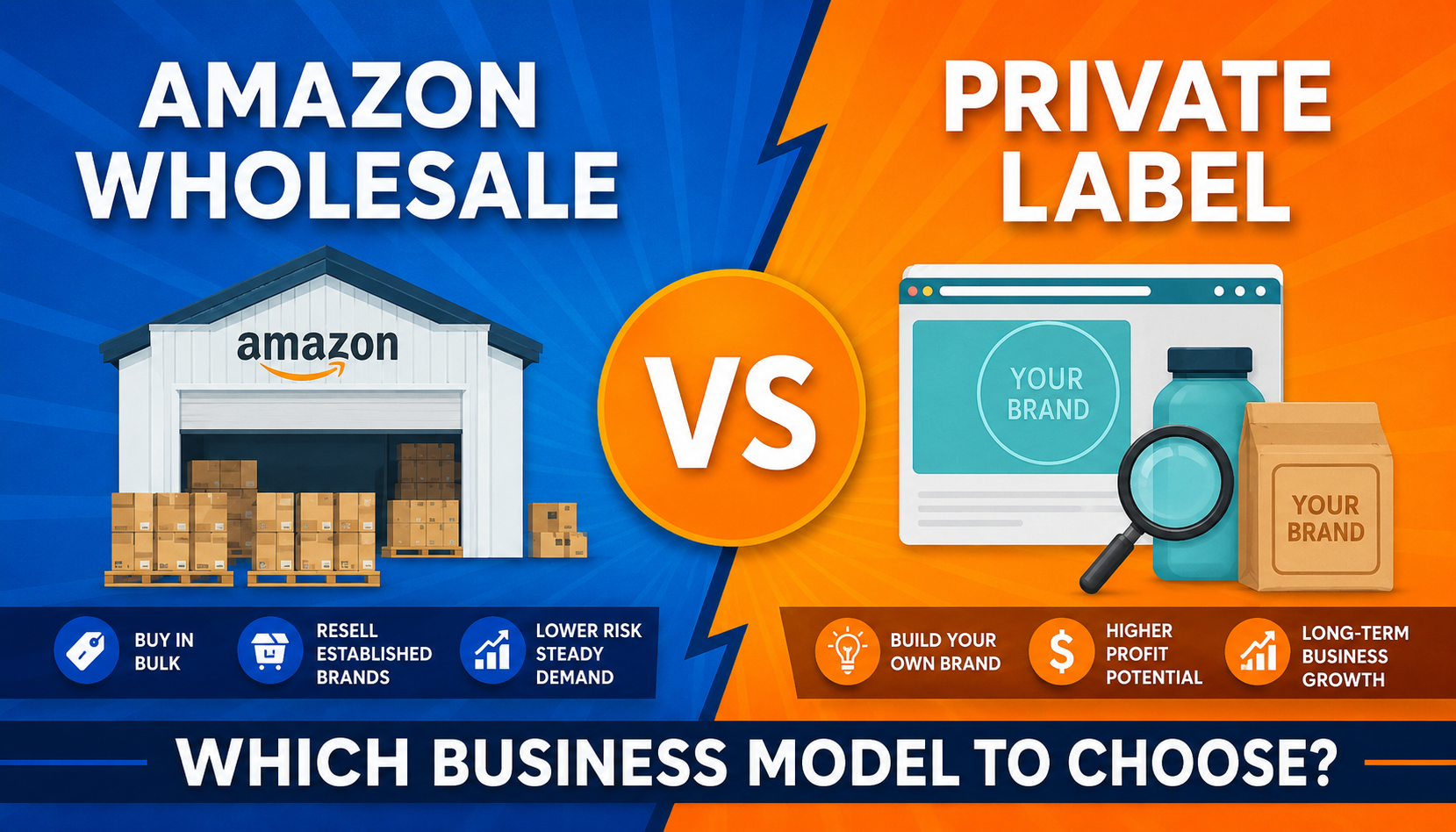
The biggest decision that new Amazon sellers face is choosing between Amazon wholesale and private-label. Both models can be profitable, but they operate very differently. In a wholesale Amazon business, you purchase established products from authorized distributors and resell them on Amazon. In an Amazon private-label business, you create your own branded products and build a unique presence in the marketplace. With more than 1.9 million active Amazon sellers worldwide and over 60% of Amazon sales coming from third-party sellers, the opportunity remains important for entrepreneurs entering e-commerce.
There are many sellers who succeed with both approaches. Some prefer Amazon FBA wholesale because they can start selling branded products on Amazon without spending months developing a brand. Others focus on Amazon's private-label products because they want long-term control and higher margins.
This guide explores the key differences between these Amazon seller business models, including startup costs, profitability, scalability, and risk. By the end, you will have a clear Amazon business model comparison to help decide whether wholesale vs private-label Amazon FBA is the better fit for your goals and resources.
Amazon wholesale is a business model where sellers purchase branded products in bulk from manufacturers or authorized distributors and resell them through the Amazon marketplace. Unlike private-label sellers, you don't create a brand or product. Instead, your focus is on efficient product sourcing, competitive pricing, and strong inventory management.
Since these products already have demand, reviews, and established listings, sales can start quickly. In fact, third-party sellers account for more than 60% of Amazon's sales volume, highlighting the scale of opportunity available to wholesale sellers.
Key characteristics include:
Established demand and proven sales history
Existing listings and customer reviews
Competitive Buy Box environment with multiple sellers
The biggest advantages are faster setup and predictable sales data. However, lower profit margins, supplier dependence, and limited brand ownership can make long-term growth more challenging.
Private-labels on Amazon involve sourcing products from manufacturers, customizing them, and selling them under your own brand name. This e-commerce business model gives sellers complete control over branding, pricing, and customer experience. You can create unique product pages and build a long-term business asset, rather than competing on existing listings.
Successful private-label sellers often rely on strong supplier relationships and product differentiation strategies to stand out in crowded categories. Recent industry data suggests that private-label remains one of the most popular Amazon selling approaches among active sellers.
Key characteristics include:
Full brand ownership
Product customization opportunities
Greater marketing responsibility
In this model, the key benefits are stronger pricing control, higher profit potential, and brand equity creation. The tradeoff is a higher startup investment and more extensive product research. Also, it involves a longer launch timeline as part of a broader Amazon seller strategy and online retail business.
|
Factor |
Wholesale |
Private-Label |
|
Product Type |
Established branded products |
Custom-branded products |
|
Brand Ownership |
No |
Yes |
|
Startup Cost |
Moderate |
Higher |
|
Product Development |
Not required |
Required |
|
Competition |
Buy Box competition |
Listing competition |
|
Profit Margins |
Lower |
Higher |
|
Time to Launch |
Faster |
Slower |
|
Marketing Effort |
Low to moderate |
High |
|
Scalability |
Supplier-dependent |
Brand-driven |
|
Long-Term Value |
Limited asset creation |
Strong brand equity |
|
Pricing Control |
Limited |
High |
|
Exit Value |
Lower |
Higher |
Startup costs often influence which Amazon business model sellers choose. In wholesale, expenses typically include inventory purchases, distributor minimum order quantities, and FBA storage and fulfillment fees. But a realistic beginner might invest $3,000–$5,000 in inventory across several proven products.
As you are paying for packaging design, product development, professional photography, trademark registration, and launch advertising, private-label usually requires more capital as compared to Amazon wholesale. Before generating meaningful sales, a common first product launch can cost between $5,000 and $10,000.
For example, a wholesale seller may purchase 200 units of an established household brand, while a private-label seller invests the same amount into creating a custom product and building a branded listing from scratch.
Profit margins are often the deciding factor in the Amazon wholesale vs private-label debate. In highly competitive categories like grocery and household goods, margins often fall below 15%, while niche wholesale products can reach 25% or more. Depending on sourcing costs and Buy Box competition. When multiple sellers offer the same product, price reductions can quickly impact profitability.
Because they control pricing and product positioning, private-label sellers usually enjoy margins ranging from 25% to 50% or more. A branded product can sell at a premium if customers perceive greater value.
In the short term, wholesale may generate faster revenue due to established demand. Over the long term, private-labels often deliver stronger profitability because repeat customers and brand loyalty reduce the chances of dependence on constant price competition.
Every Amazon business carries risk. Wholesale sellers face supplier restrictions, Buy Box price wars, and inventory shortages when distributors run out of stock. A profitable product today can become unavailable tomorrow.
Private-label sellers face different challenges, including product launch failures, trademark disputes, and rising advertising costs. A poorly researched product can struggle to gain popularity even with a good investment. Sellers reduce these risks by validating products before committing large budgets. Supplier verification helps wholesale sellers avoid sourcing issues, while market research and customer feedback help private-label sellers identify demand.
For both business models, effective inventory planning also minimizes stockouts and excess storage fees.
Scalability looks very different for wholesale and private-label businesses. Wholesale growth usually comes from expanding supplier relationships, increasing order volume, and adding more products from established brands. While revenue can grow quickly, the business remains dependent on supplier access and pricing agreements.
Private-label brands scale by expanding product lines, building customer loyalty, and selling across multiple channels beyond Amazon. This creates stronger brand recognition and more predictable demand. From a valuation perspective, branded businesses often attract higher acquisition offers because they own intellectual property, customer loyalty, and pricing power. That's why many entrepreneurs view private-labels as a long-term asset rather than simply a revenue stream.
Amazon wholesale is often the best choice for sellers who want faster market entry and less focus on branding. More than 60% of Amazon sales come from third-party sellers, demonstrating the ongoing opportunity for reselling established products.
This model is ideal for:
Beginners looking for quicker results
Sellers with existing distributor relationships
Investors seeking lower branding involvement
A typical wholesale seller may start with a budget of $3,000–$10,000 and focus on proven products rather than product development. If your primary goal is generating sales quickly without developing a brand, wholesale can be a good fit. However, entrepreneurs seeking an even lower inventory commitment often start with Shopify Dropshipping before switching to wholesale or private-label models.
Private-labels are best suited for entrepreneurs who want to build a long-term brand and maximize profitability. Industry reports show that private-label remains one of the most widely adopted Amazon seller approaches, which shows its strong growth potential.
This model is ideal for:
Entrepreneurs focused on brand building.
Sellers seeking higher margins
Business owners with long-term growth goals
Most successful private-label sellers start with budgets between $5,000 and $15,000 and have at least a basic understanding of marketing, branding, and product research.
If you are comfortable investing time into customer acquisition and brand development, Amazon's private-label products can create a valuable business asset with significant expansion opportunities. Many sellers also expand beyond Amazon by building their own Shopify private-label stores to gain more control over branding and customer relationships.
The choice between Amazon Wholesale vs. private-label ultimately depends on your budget, experience, and long-term goals. Wholesale offers a faster path to sales because you are working with products that already have demand and reviews. Private-labels require more investment and patience, but they provide greater control, stronger margins, and the opportunity to build a brand asset.
If you are new to Amazon and want a simpler start, wholesale may be the better option. If your goal is to create a scalable business with long-term value, private-label is often worth the extra effort. Evaluate your resources carefully and choose the right model that aligns with your growth ambitions.
Is Amazon wholesale profitable in 2026?
Yes, Amazon wholesale can still be profitable in 2026, especially for sellers who secure reliable supplier relationships and manage inventory efficiently. Success depends on sourcing products with stable demand and maintaining competitive pricing.
Which is better - Amazon wholesale or private-label?
Neither model is universally better. Wholesale is often better for faster entry and lower branding requirements, while private-label is better for sellers focused on long-term growth, brand ownership, and higher margins.
Which model has higher profit margins?
Private-labels generally offer higher profit margins because sellers control pricing, branding, and product positioning. Wholesale margins are typically lower due to Buy Box competition and limited pricing flexibility.



Re-engineer multimedia based internal or "organic" sources for progressive vortals. Assertively leverage existing economically sound total linkage whereas global best practices.






Subscribe to recieve High-potential marketplace analytics, deep-dive e-commerce insights, and expert scaling strategies.

(217) 837-4275

[email protected]

2501 Chatham Rd Ste 6540 Springfield, IL 62704



The Axios Digital is a subsidiary of 1st Page Rank, delivering world-class digital solutions backed by years of industry experience.